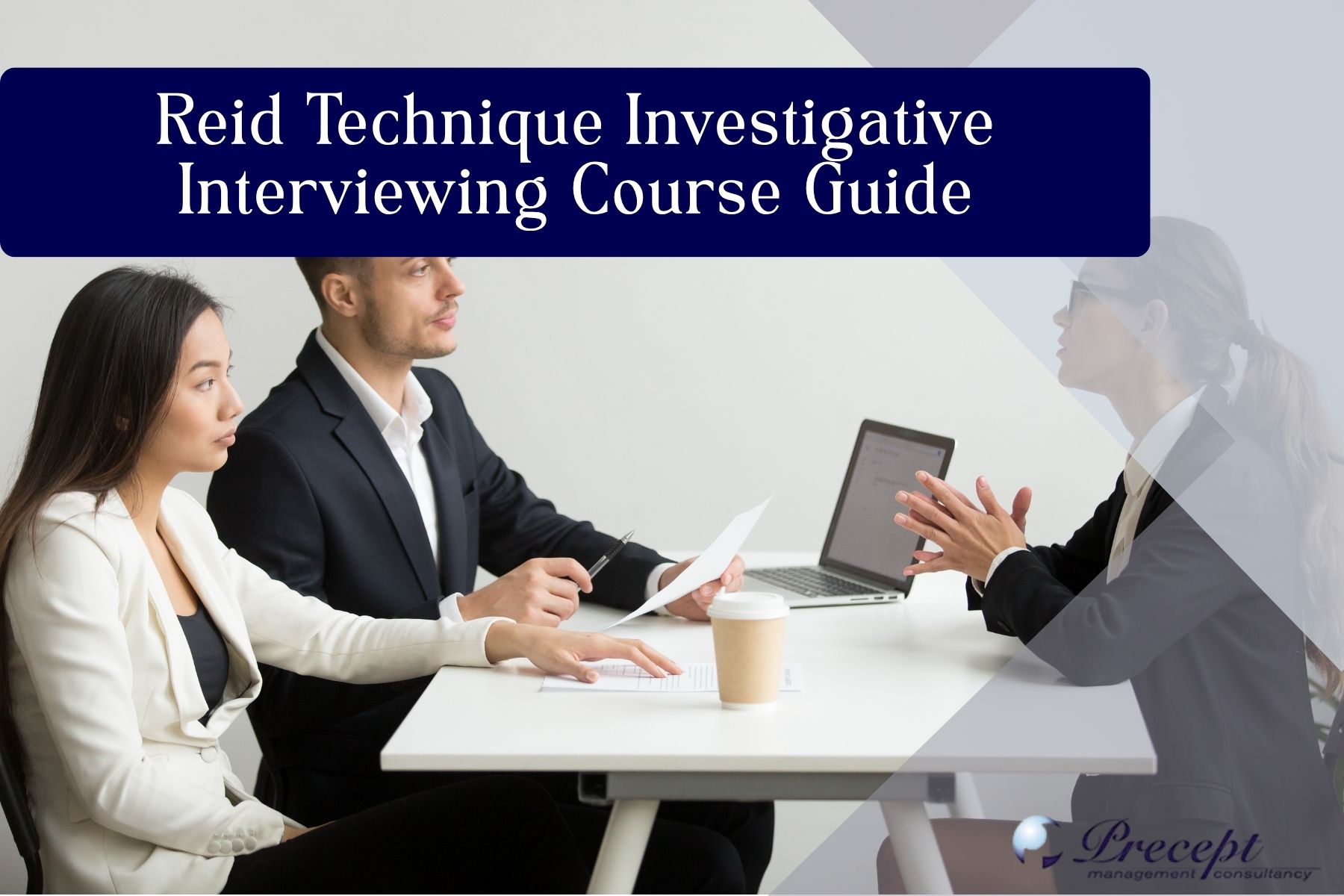

Investigative interviewing is a critical skill in security, compliance, fraud investigation, human resources, and corporate risk management. When organizations need to understand what happened, why it happened, and who may have been involved, the quality of the interview process can strongly influence the quality of the outcome.
One of the most widely known approaches in this field is the Reid Technique. Developed in the United States, the Reid Technique is commonly associated with investigative interviewing and interrogation training. It is often discussed in law enforcement, corporate investigations, loss prevention, internal compliance, and security management contexts.
For organizations, understanding the Reid Technique is not simply about learning an interview method. It is about understanding how structured questioning, preparation, behavioral observation, and ethical practice can support better fact-finding.
What Is the Reid Technique?
The Reid Technique is a structured method used in investigative interviews and interrogations. It is designed to help investigators gather information, assess responses, and manage interviews in a disciplined and purposeful way.
At its core, the technique emphasizes preparation, understanding the difference between an interview and an interrogation, asking questions strategically, and evaluating information in the context of the wider investigation.
In professional settings, the Reid Technique is often used as part of a broader investigative framework. It should not be viewed as a shortcut to a confession or a replacement for evidence. A well-conducted investigation still depends on facts, documentation, corroboration, professional judgment, and respect for legal and ethical standards.
Why Investigative Interviewing Matters
Many organizations face situations where clear, reliable information is essential. These may include workplace misconduct, fraud concerns, security incidents, policy breaches, financial irregularities, or internal disputes.
In these situations, a poorly handled interview can create confusion, damage trust, or produce unreliable information. A well-structured interview, on the other hand, can help clarify events, identify inconsistencies, protect organizational interests, and support fair decision-making.
Effective investigative interviewing helps organizations:
- Gather accurate and relevant information
- Understand timelines, actions, and responsibilities
- Reduce assumptions and emotional decision-making
- Support compliance and internal governance
- Protect both the organization and the individuals involved
This is why professional training in interviewing techniques is valuable for security managers, compliance officers, HR professionals, auditors, investigators, and managers responsible for sensitive internal matters.
Key Principles Behind the Reid Technique
While the Reid Technique is often associated with formal interrogation, many of its broader principles are relevant to professional investigative practice.
Preparation Before the Interview
A successful interview begins before the first question is asked. Investigators need to understand the available evidence, define the purpose of the interview, identify key issues, and plan the sequence of topics.
Preparation helps ensure that the interview stays focused and that important details are not missed.
Understanding the Interview Context
Not every conversation is an interrogation. In many cases, the first step is an information-gathering interview. The objective is to understand events, collect facts, and assess what further inquiry may be needed.
A professional investigator must understand the difference between speaking with a witness, a complainant, a person of interest, or a subject of investigation.
Asking Structured Questions
Investigative interviews require more than casual conversation. Questions should be clear, relevant, and designed to uncover specific information.
A structured approach helps the interviewer move from general background to specific details while allowing the interviewee to provide their account in a meaningful way.
Observing Communication and Behavior Carefully
The Reid Technique includes attention to verbal and non-verbal behavior. However, modern investigative practice should treat behavioral indicators with caution. Stress, culture, personality, fear, and misunderstanding can all affect how a person communicates.
Behavior should never be used as the only basis for judgment. It must be considered alongside evidence, context, and corroborating information.
Maintaining Professional Control
Difficult interviews can become emotional or unfocused. A trained interviewer must remain calm, organized, and professional throughout the process.
Professional control does not mean intimidation. It means guiding the conversation, maintaining structure, listening carefully, and ensuring that the interview remains fair and purposeful.
Ethical Considerations and Modern Best Practice
The Reid Technique has also been the subject of debate, especially in relation to false confessions and the use of pressure in interrogation settings. This is why organizations must approach any investigative interviewing method with care.
For corporate, government, and professional environments, ethical practice is essential. Interviews should be conducted in a way that respects legal standards, internal policies, and the dignity of the individuals involved.
Best practice includes:
- Avoiding coercive or misleading tactics
- Documenting the interview process properly
- Supporting conclusions with evidence
- Recognizing vulnerable interviewees
- Ensuring interviewers are properly trained
- Following applicable laws and organizational policies
The objective of an investigation should not be to force a desired outcome. The objective should be to establish facts as accurately and fairly as possible.
How Organizations Can Benefit From Interviewing Training
Professional interviewing training helps organizations handle sensitive matters with greater confidence. It gives managers, investigators, and compliance professionals a structured framework for preparing interviews, asking better questions, assessing information, and documenting findings.
Training can be especially valuable for teams involved in:
- Corporate security
- Internal investigations
- Fraud prevention
- Compliance and governance
- Human resources
- Risk management
- Loss prevention
- Workplace misconduct investigations
When applied responsibly, investigative interviewing techniques can help organizations make better decisions, reduce risk, and strengthen accountability.
The Role of Professional Judgment
No interviewing technique should be applied mechanically. Every investigation is different. The context, evidence, people involved, cultural setting, legal environment, and organizational policies all matter.
Professional judgment is what allows trained interviewers to adapt their approach while maintaining fairness and structure.
This is where training becomes important. A method is only as effective as the person applying it. Skilled interviewers understand not only what questions to ask, but when to ask them, how to listen, and how to evaluate answers responsibly.
Conclusion
The Reid Technique remains one of the most recognized approaches in investigative interviewing and interrogation training. For organizations, its value lies not in using pressure or seeking quick admissions, but in understanding the importance of structure, preparation, questioning, and professional control.
Used responsibly, investigative interviewing can support better fact-finding, stronger governance, and more informed decision-making. However, it must always be supported by evidence, ethical standards, and proper training.
For organizations seeking to strengthen investigation skills, interviewing capability, or internal risk management, professional training can provide the foundation needed to conduct interviews with confidence, fairness, and clarity.